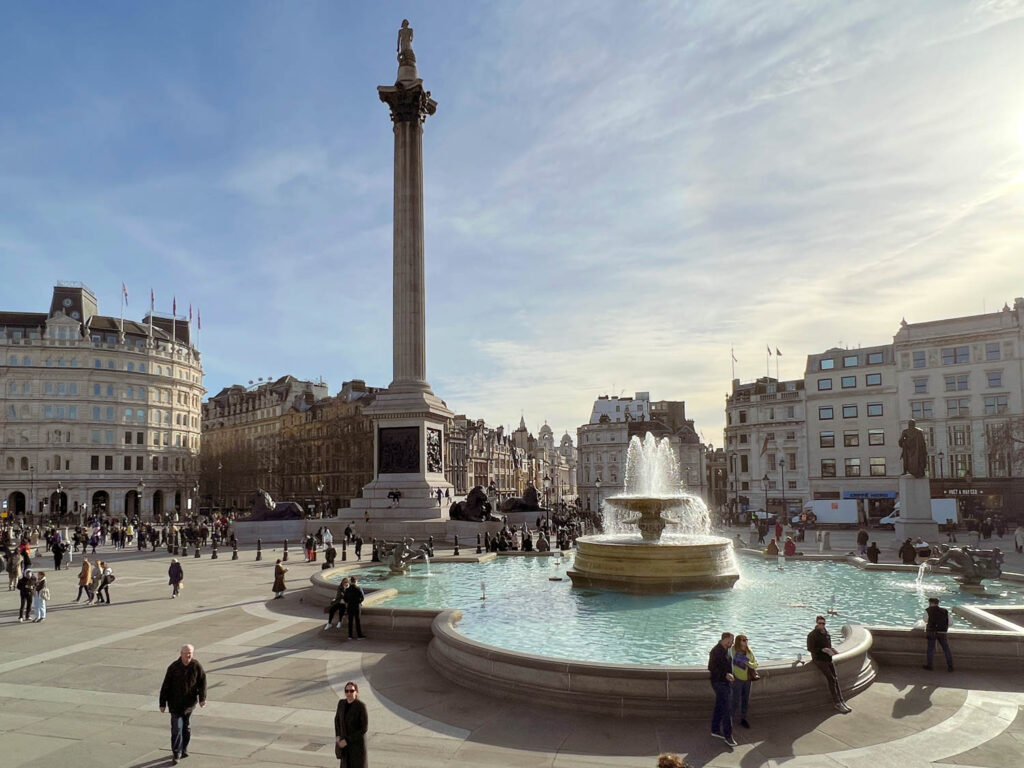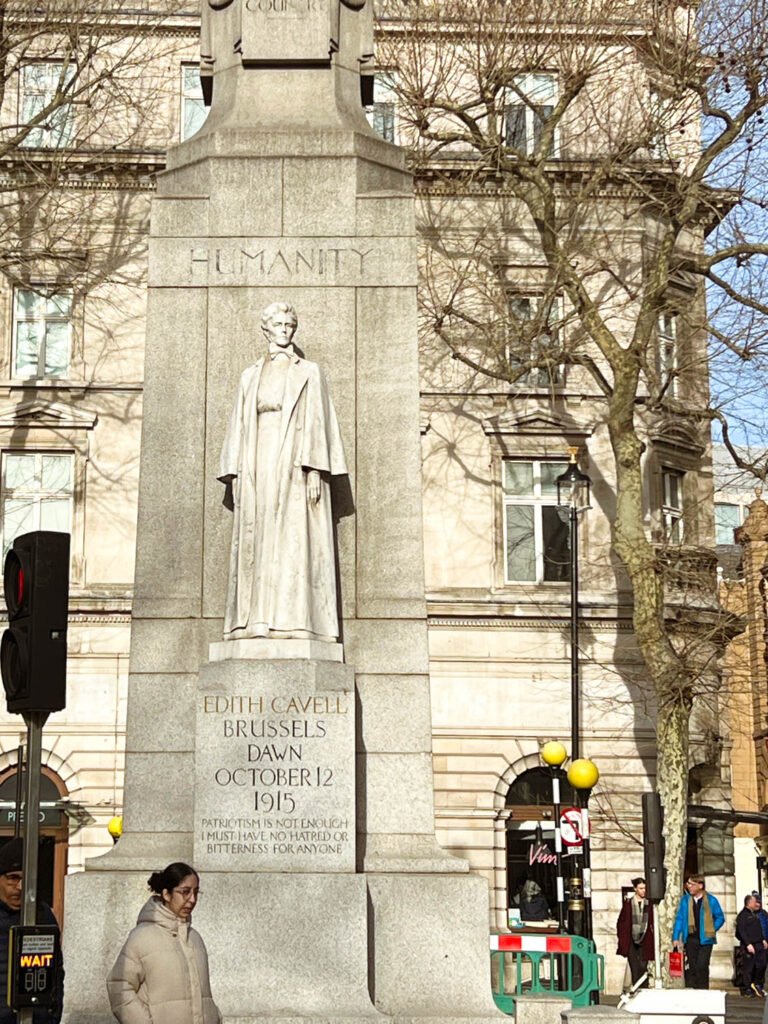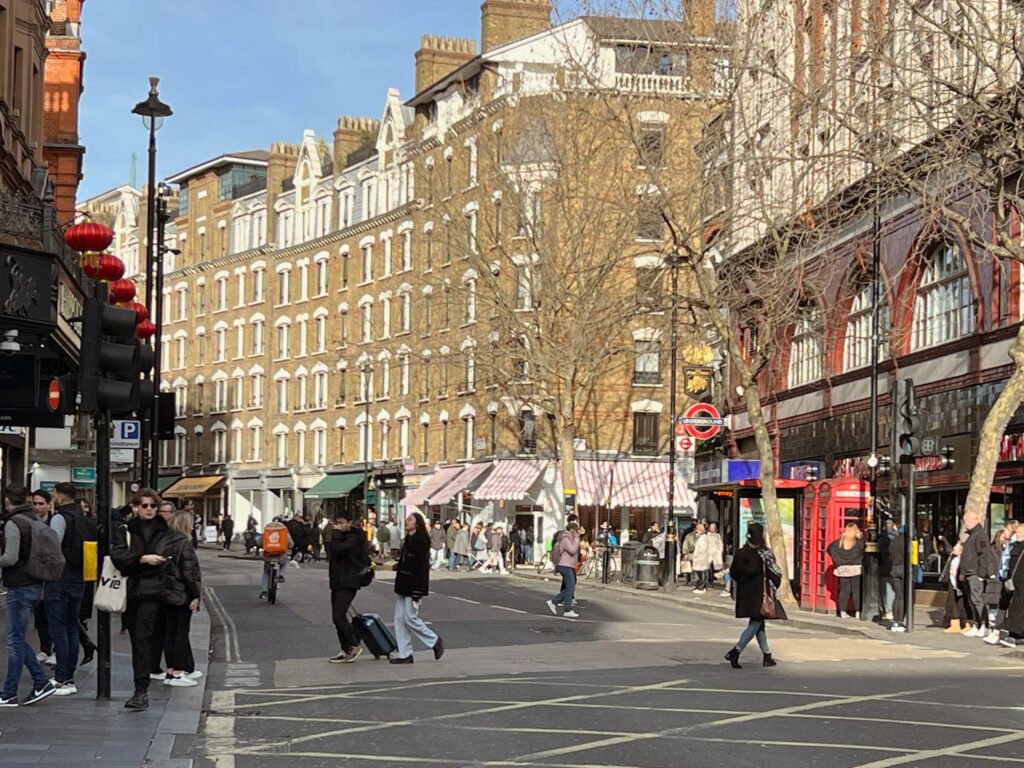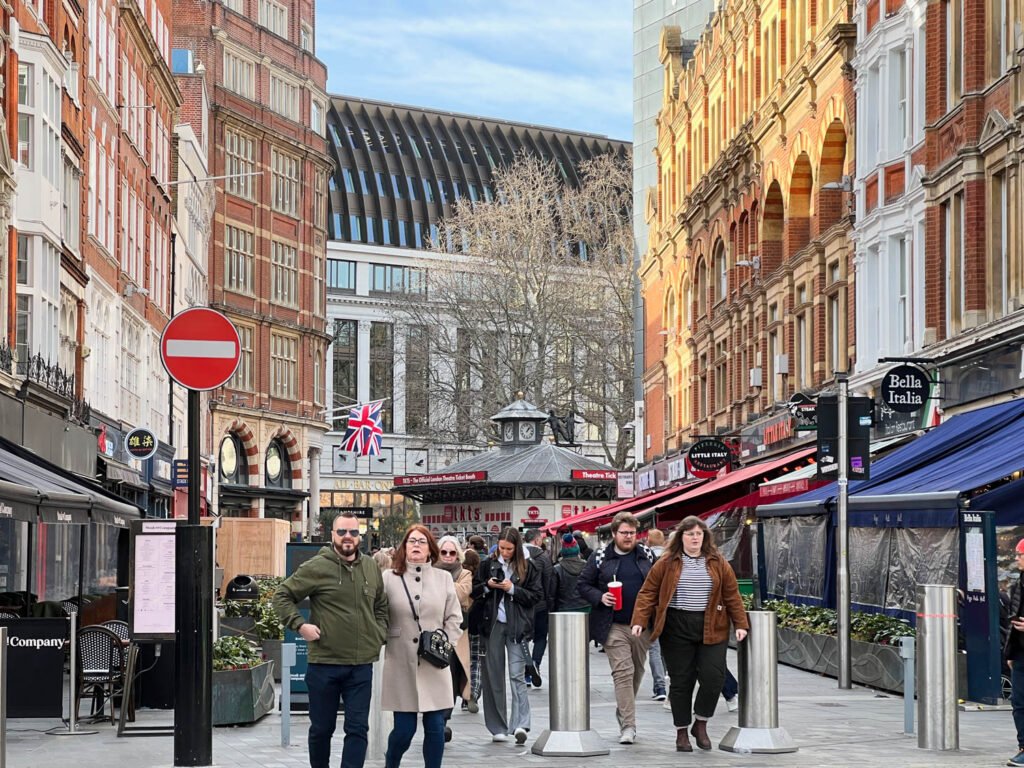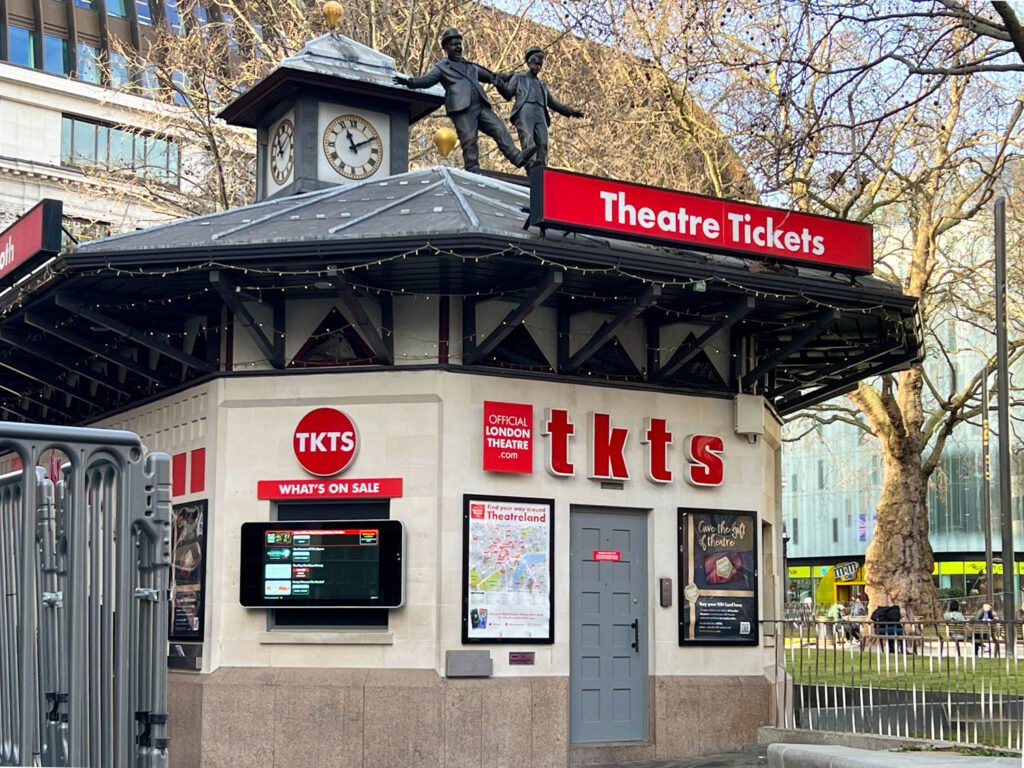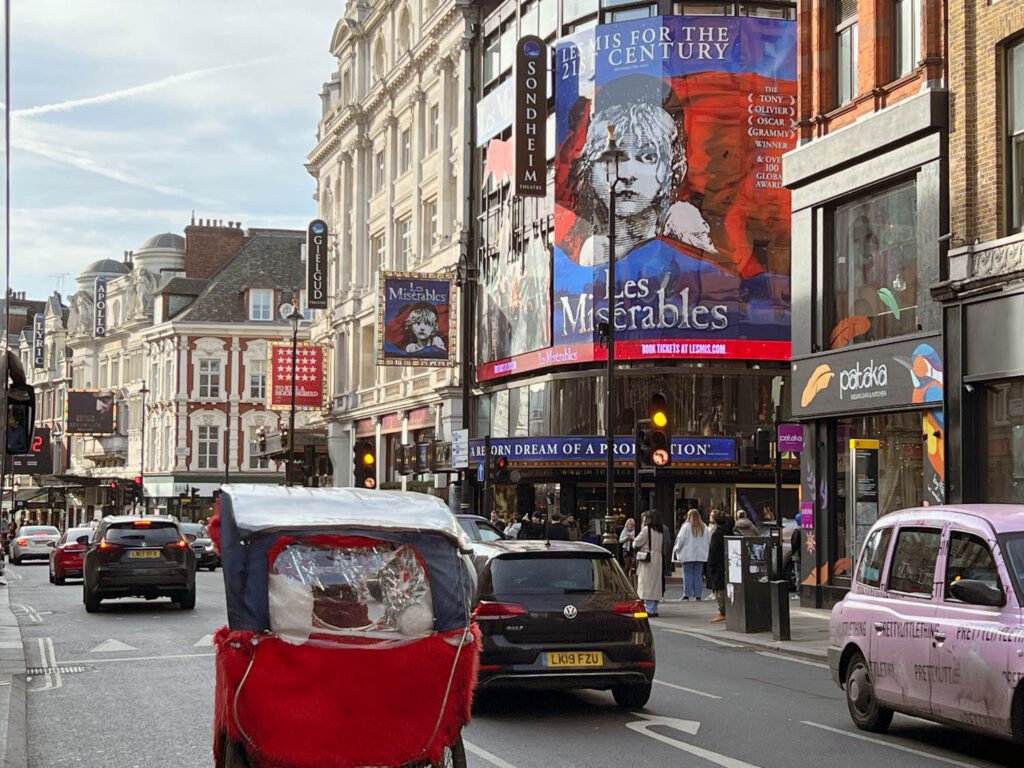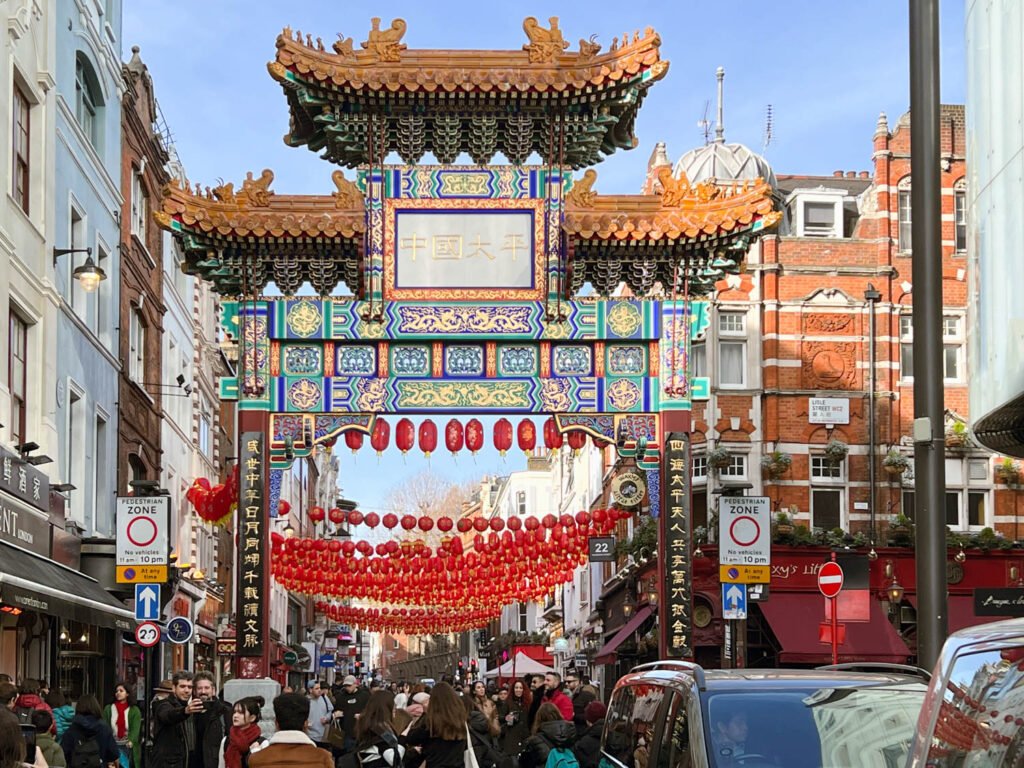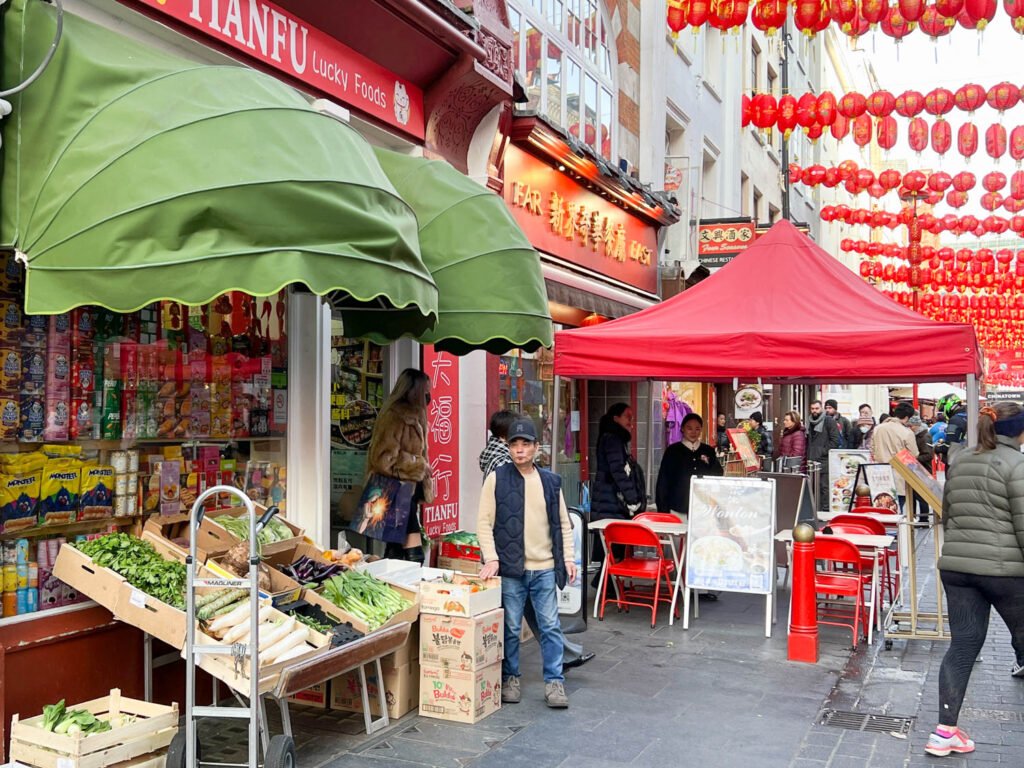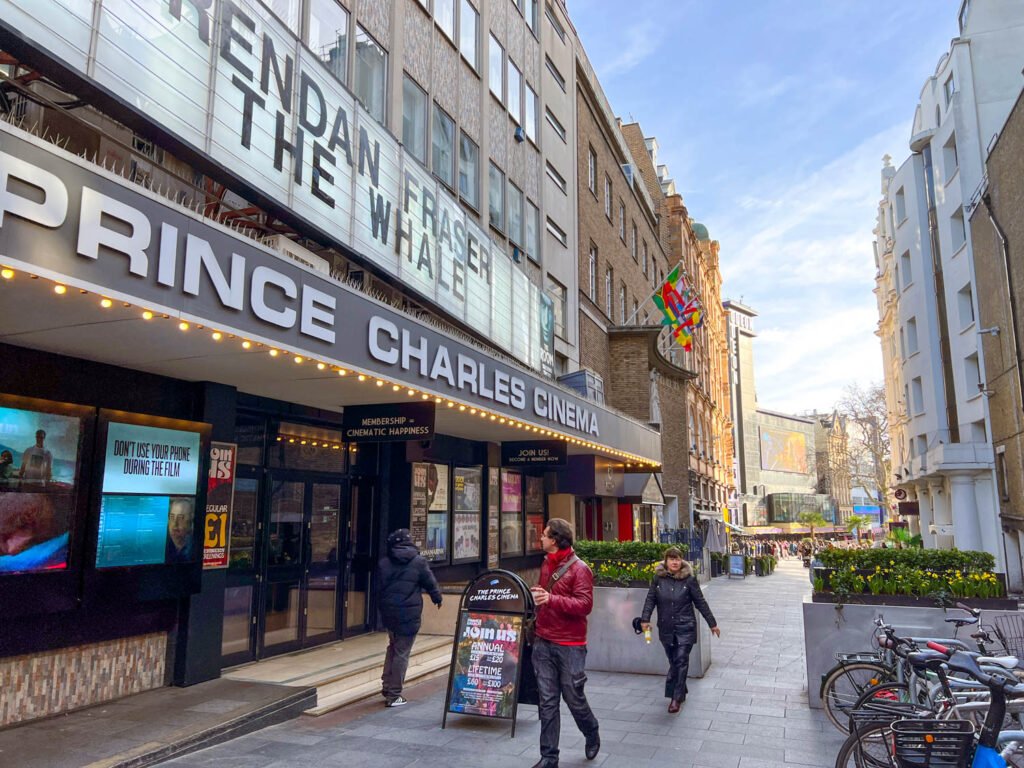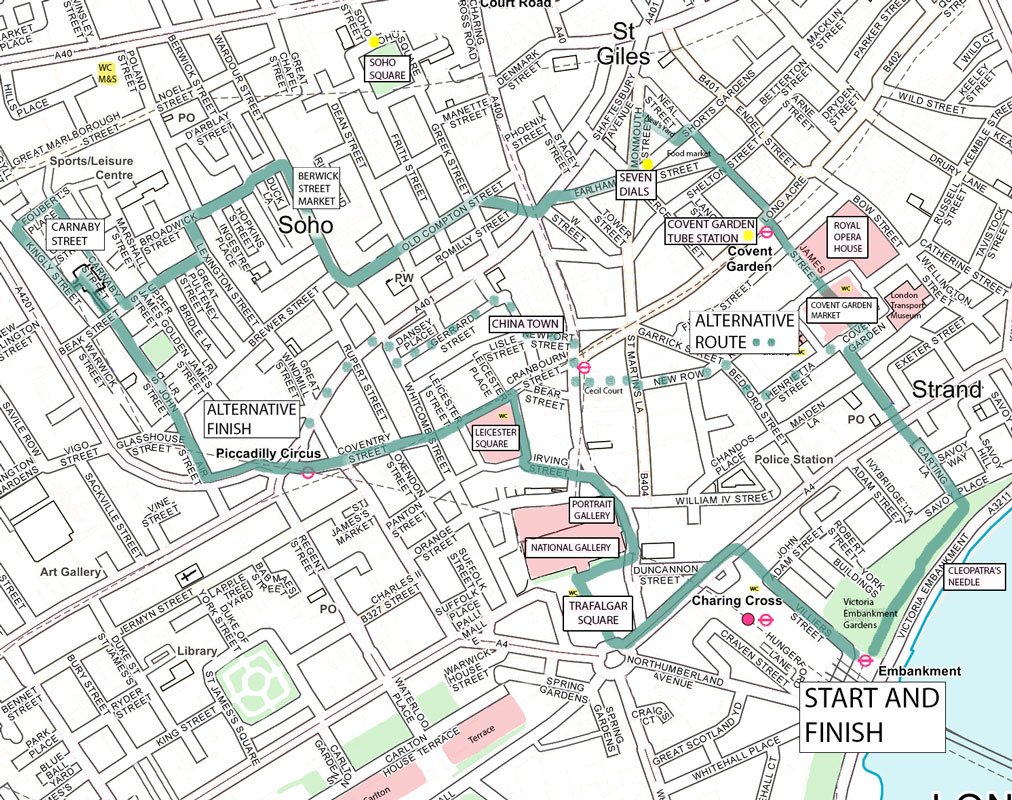
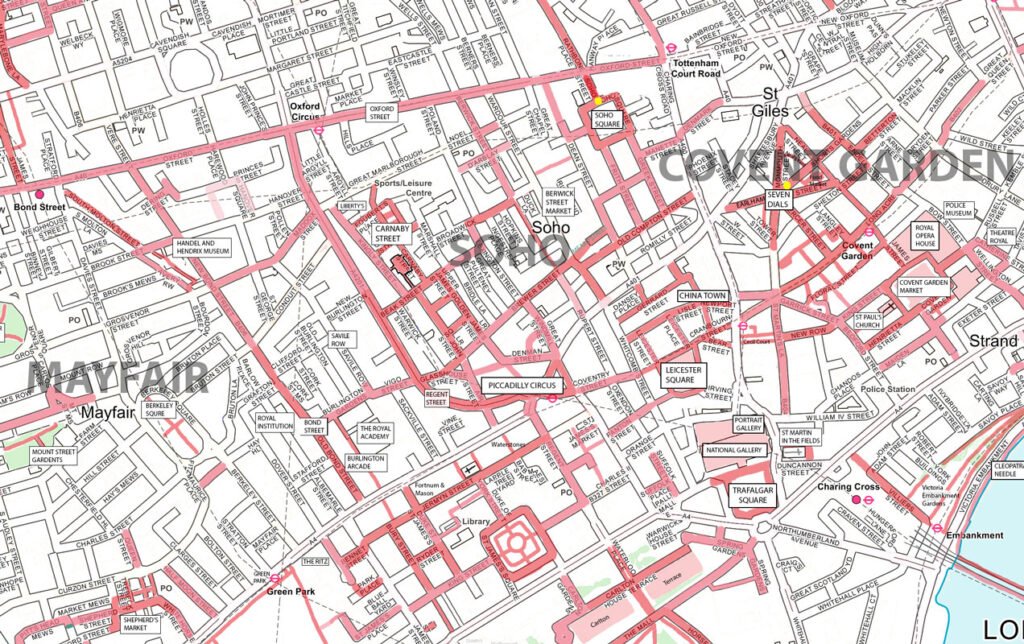
The West End includes Leicester Square and Trafalgar Square and the area to the north, and is easy to see from this map with the best bits marked.
Highlights
- The National Gallery
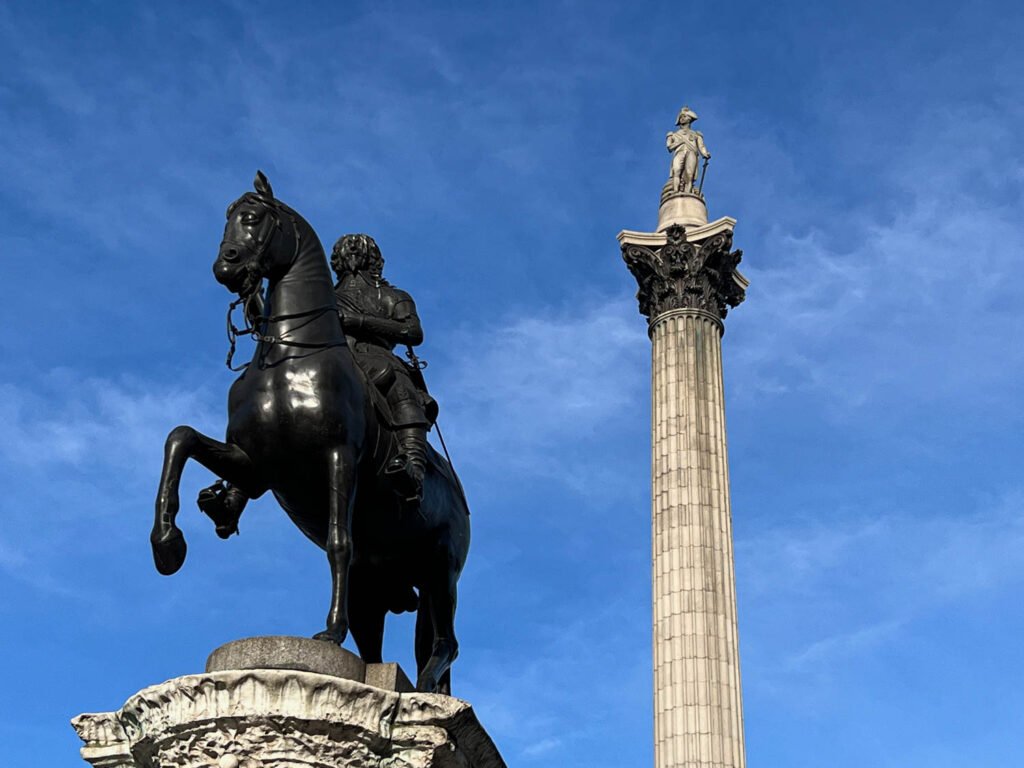
- Nelson’s Column
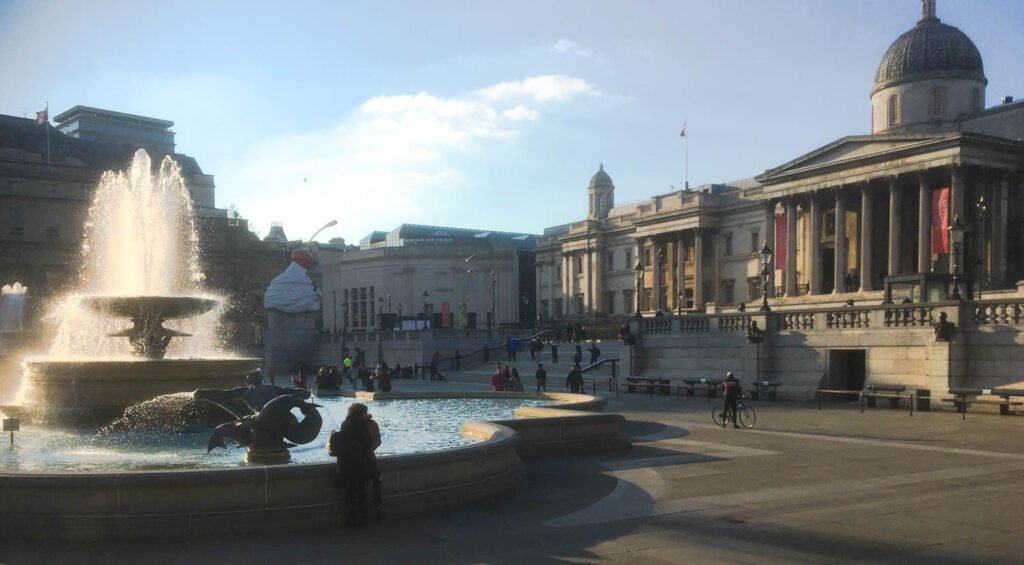
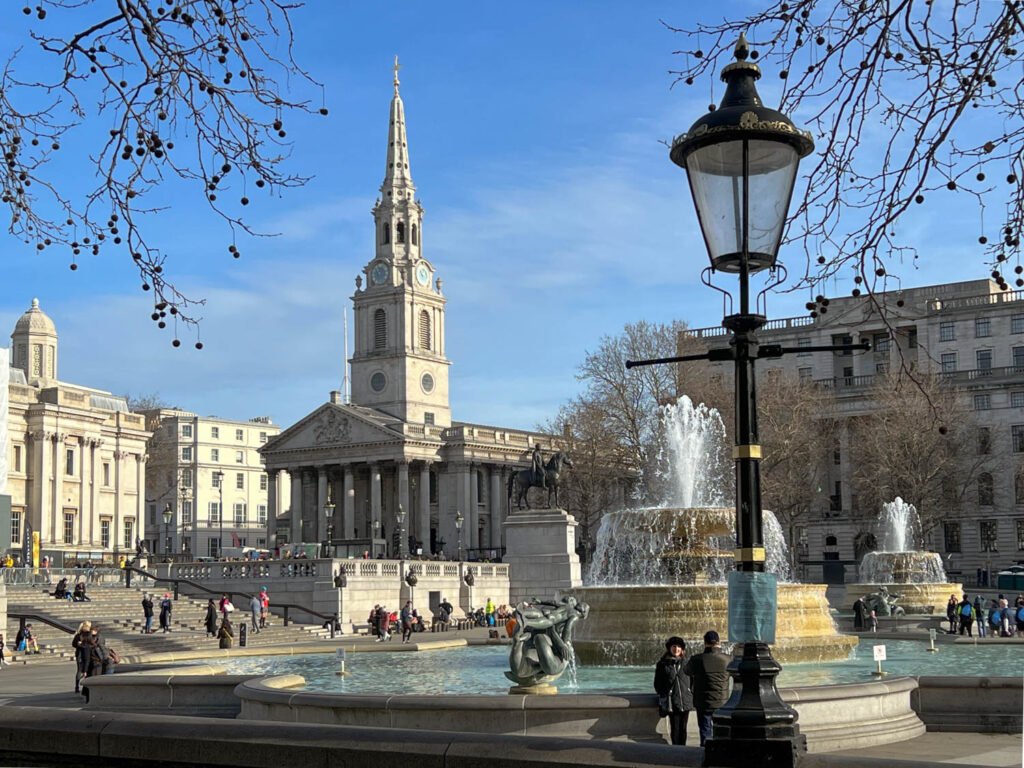
- The fountains and lions on Trafalgar Square
- The National Portrait Gallery
- Bookshops on Charing Cross Road
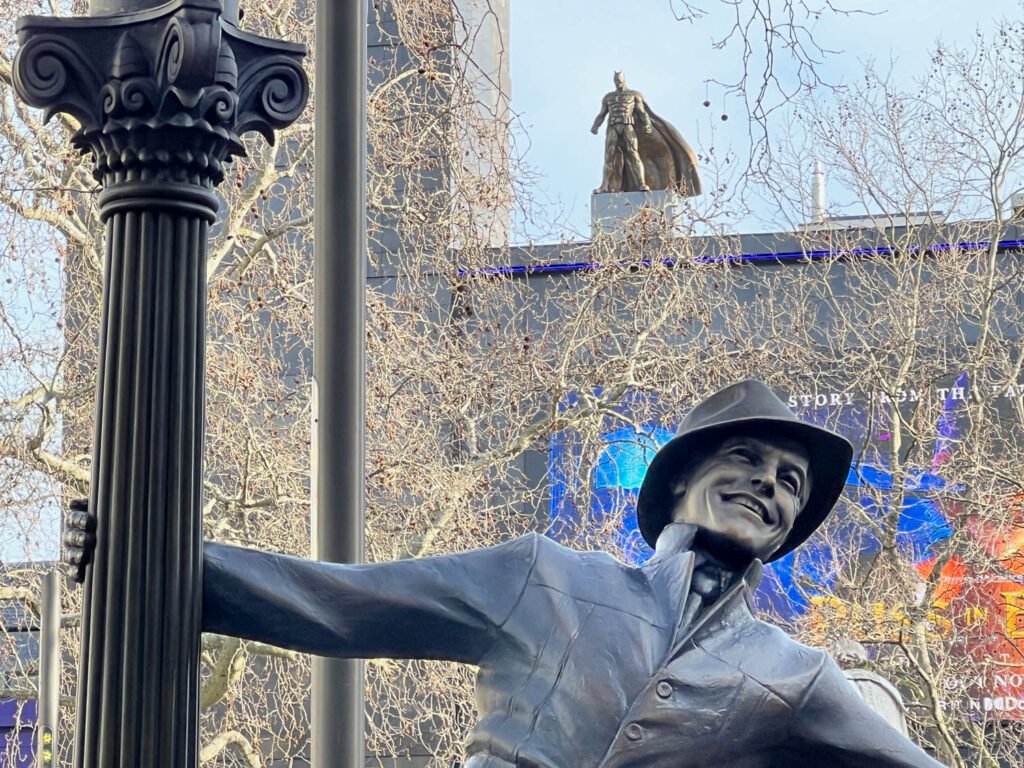
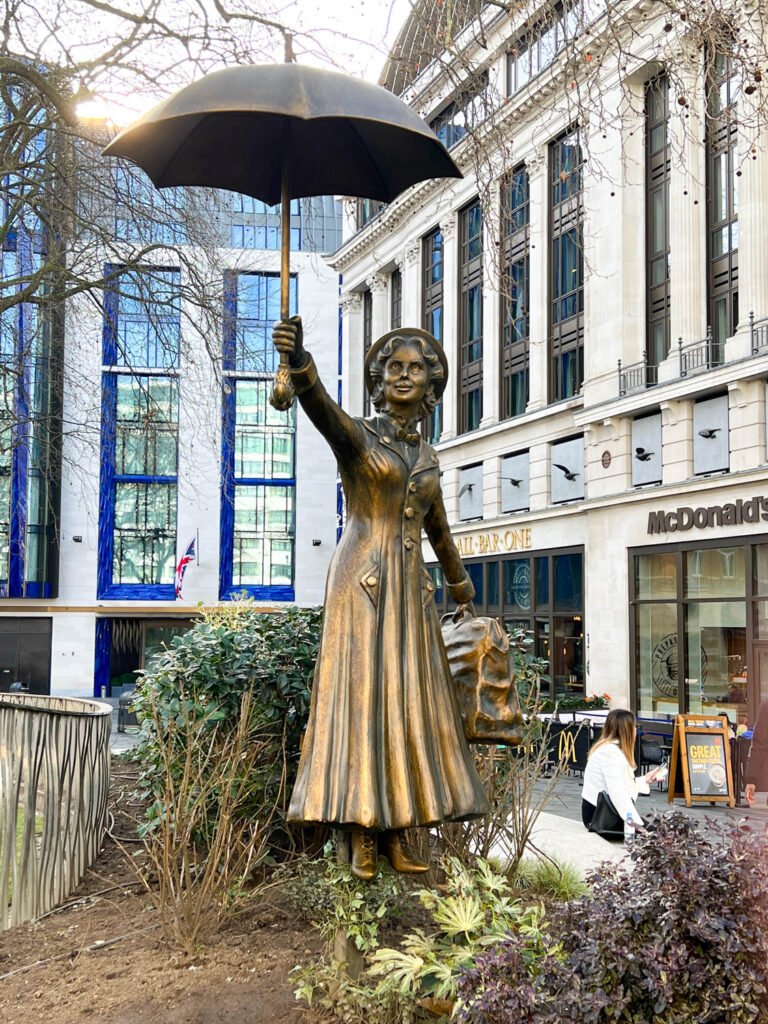
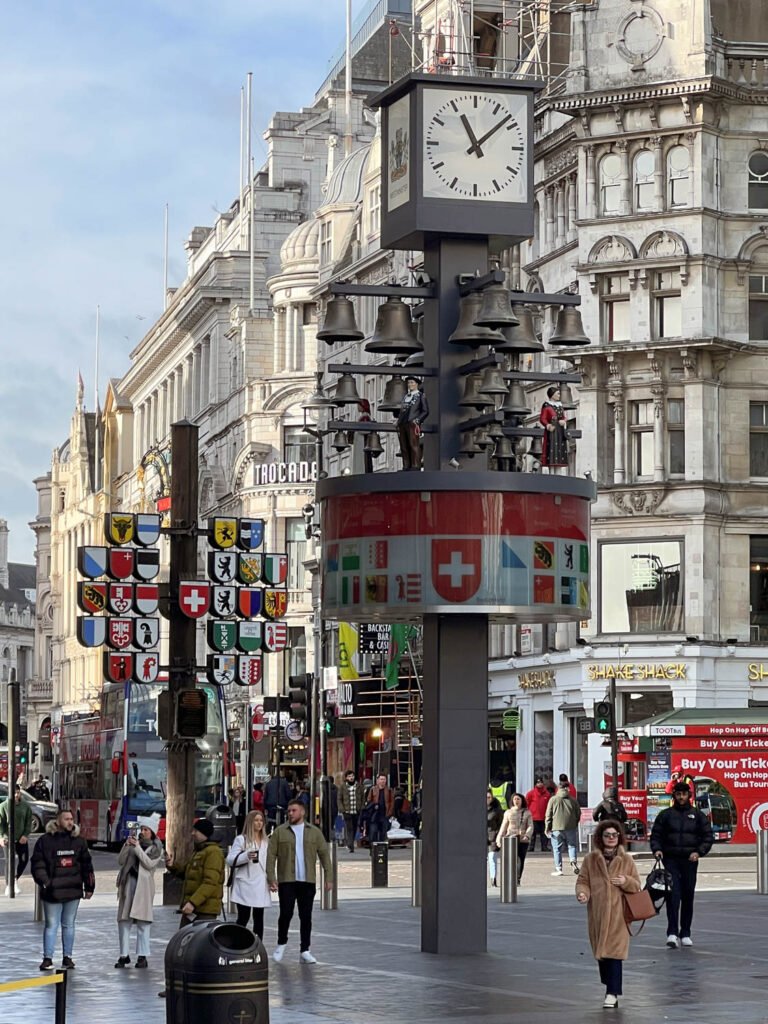
- The bustle and statues on Leicester Square
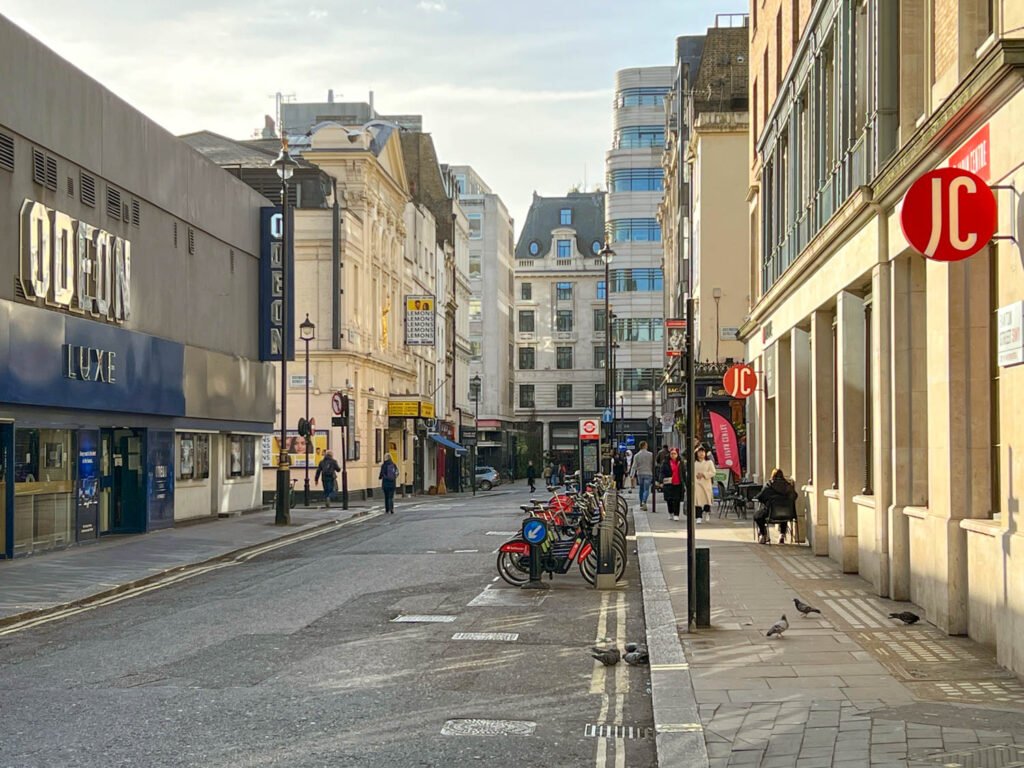
- Theatres, cinemas, restaurants and cafes
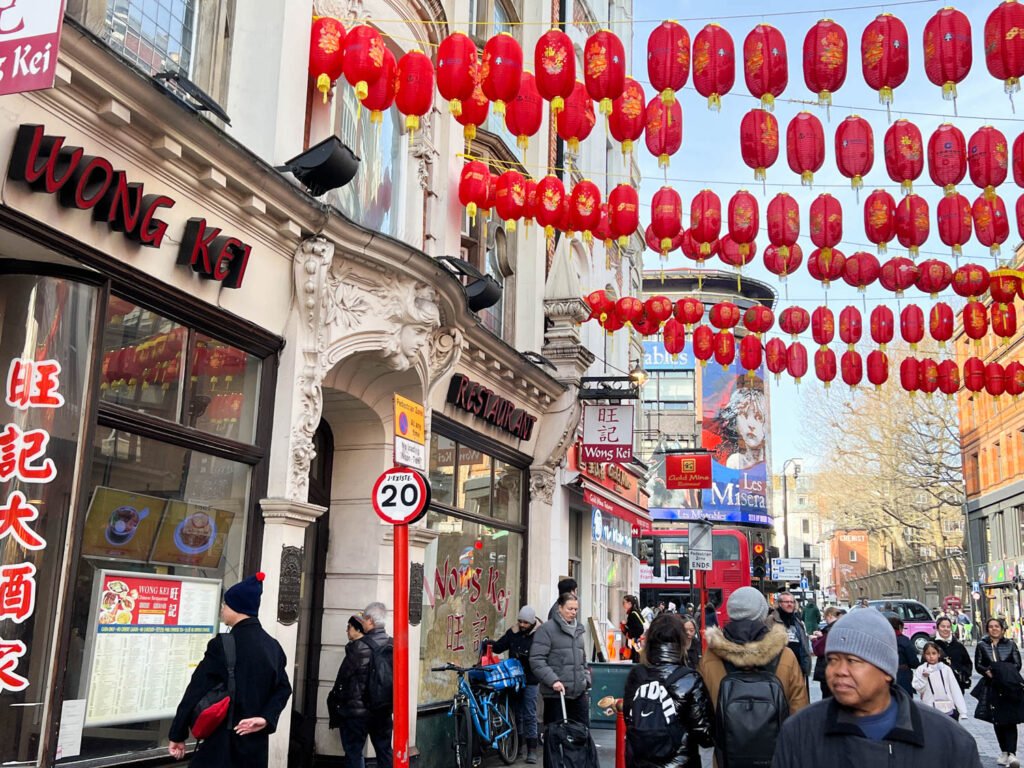
- China Town
Toilets
- National Gallery entrance hall
- Pret Pall Mall
Connections
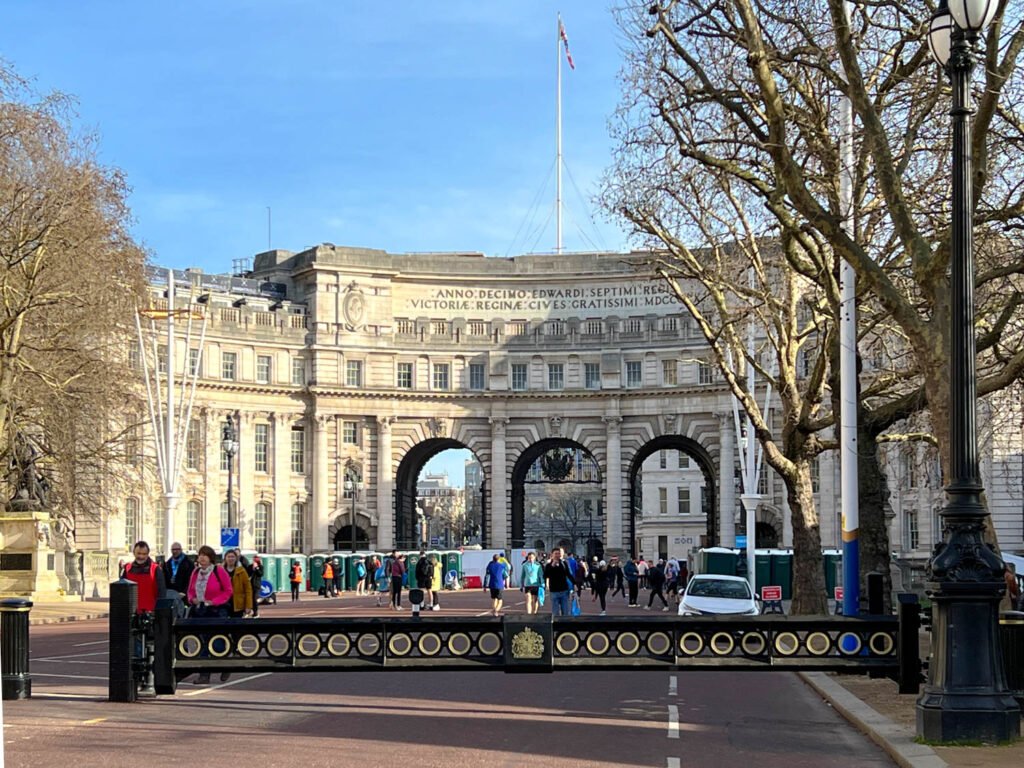
Walk north through China Town to reach Soho. To the east cross Charing Cross Road for Covent Garden, or south of that the Strand which will take you via Fleet Street to St Paul’s Cathedral. South of Trafalgar Square is Whitehall leading to the Houses of Parliament. Round to the west, Admiralty Arch leads to the Mall and Buckingham Palace. north of that is St James’s and then Piccadilly.
5 Interesting Facts
- Trafalgar Square was laid out in 1827-1835 on the site of the Kings Mews prison where Royalists were imprisoned during the Civil War. It is a rallying point for demonstrations and political meetings.
- The famous lions were modelled by Edwin Landseer, who had a dead lion from London Zoo transported to his studio in St John’s Wood by taxi for the purpose.
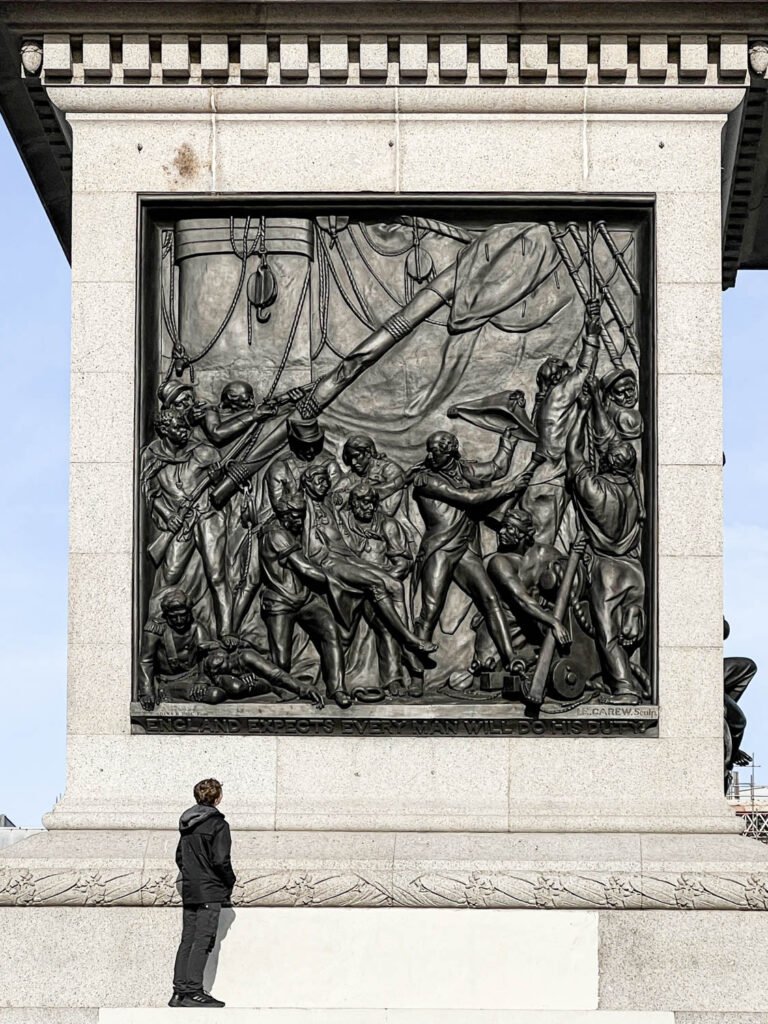
- Nelson’s Column, 150 ft-high, was completed in 1843. Nelson looks towards Plymouth where he left England for the last time. Beneath it is the Whitehall Telephone Exchange installed in the 1950’s as a precaution against nuclear attack.
- On Trafalgar Square looking down Whitehall is a statue of Charles I on is horse. He gazes down towards towards Mansion House where he was executed in 1649 having been convicted of treason by a majority of one vote. Each year around 30th January royalist re-enactors take part in a commemorative march in full costume from St James’s Palace through Horse Guards, where a religious service is held, and on to Mansion House where a wreath is laid to his memory. Charles climbed out through a window of Mansion house onto the scaffold, wearing a second shirt to prevent him from shivering from cold which might be construed as fear.
- Leicester Square was originally laid out in the 1660’s by Robert, second earl of Leicester who built the mansion Leicester House on the north side of the square and enclosed the central grassy area. The mansion is long gone and the square houses London’s greatest concentration of cinemas including the Odeon which puts out the red carpet for most film premieres.
Gallery